

























The artificial neural network prediction tool
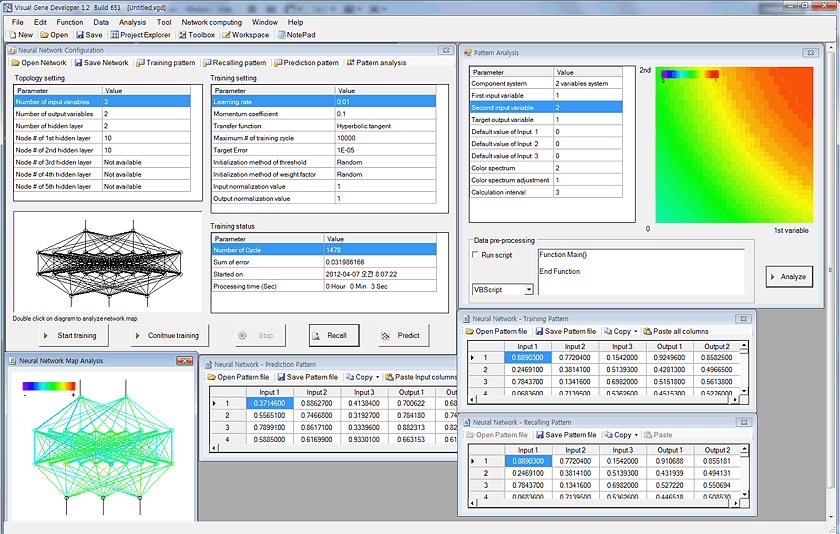
For data regression and prediction, Visual Gene Developer includes an artificial neural network toolbox. You can easily load data sets to spreadsheet windows and then correlate input parameters to output variables (=regression or learning) on the main configuration window. Because the software provides a specialized class whose name is 'NeuralNet', users can directly access to the class to make use of neural network prediction toolbox when they develop new modules. A user can use maximum 5 instances of NeuralNet including 'NeuralNet', 'NeuralNet2', 'NeuralNet3', 'NeuralNet4', and 'NeuralNet5'.
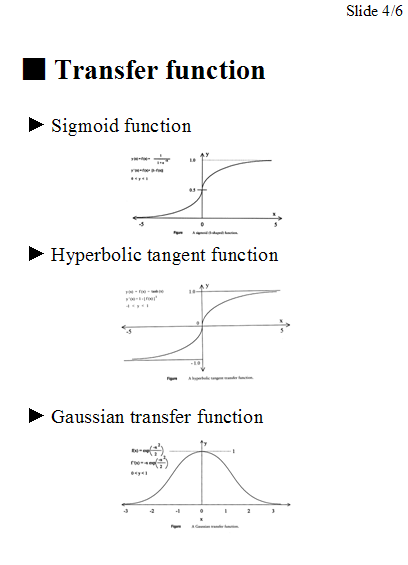
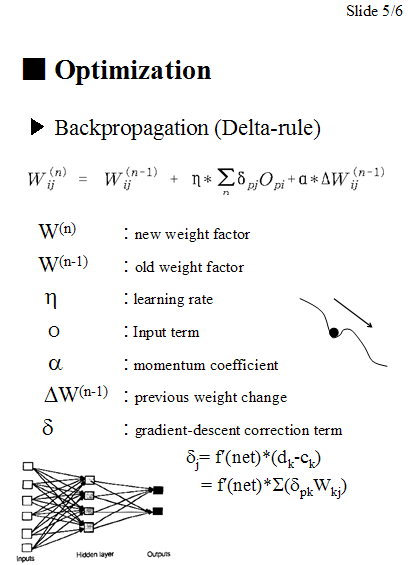
We used a typical feed-forward neural network with a standard backpropagation learning algorithm to train networks and provides several different transfer functions. Without using gene design or optimization, our neural network package works perfectly independently even though all menus are still in the software environment. In this section, we shortly describe the artificial neural networks and then demonstrate how to use neural network toolbox and the class.
New update: if you are a programmer and want to use trained neural network files in your own programs, check NeuralNet.java.
Visual Gene Developer is a free software for artificial neural network prediction for general purposes!!!
Check built-in analysis tools: data normalization, pattern analysis, network map analysis, regression analysis, programming function
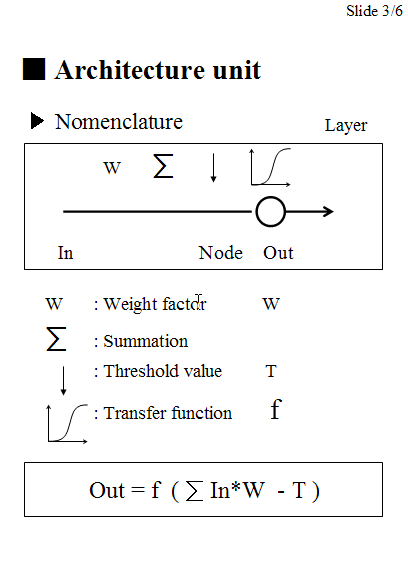
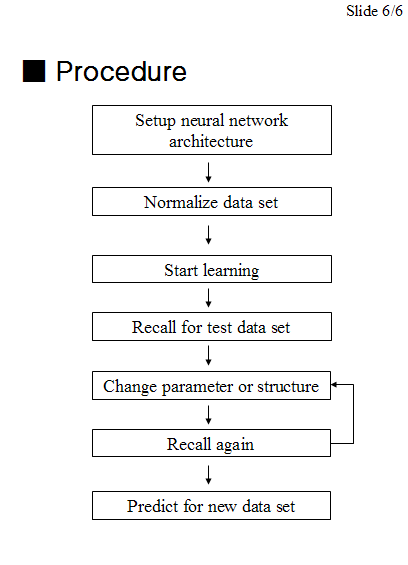
o Artificial neural network
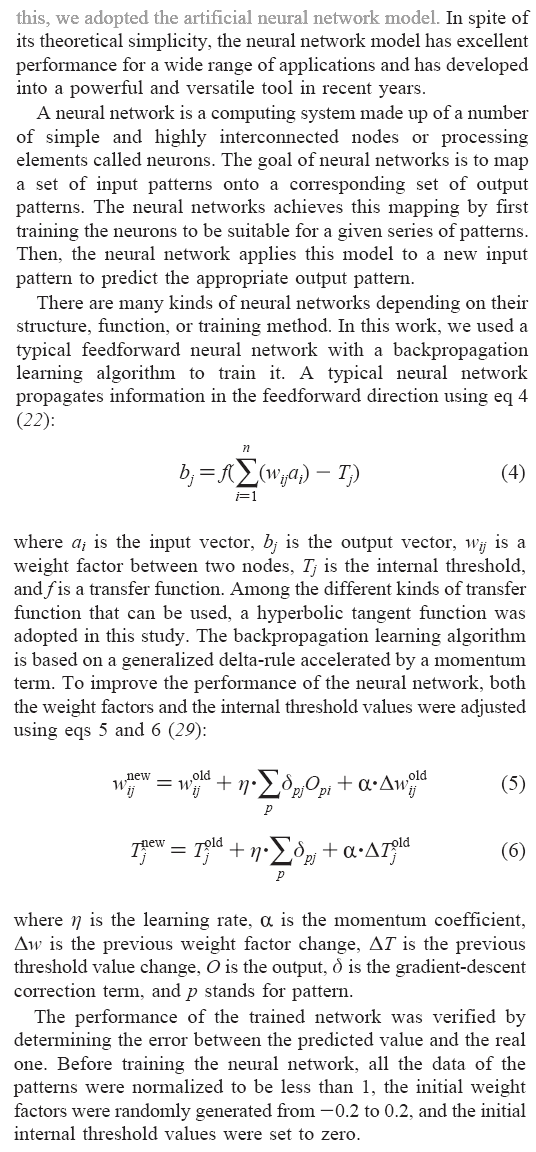
From Sang-Kyu Jung & Sun Bok Lee, Biotechnology Progress, 2006.
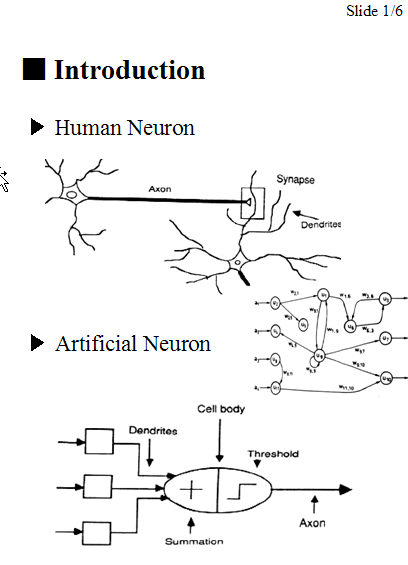
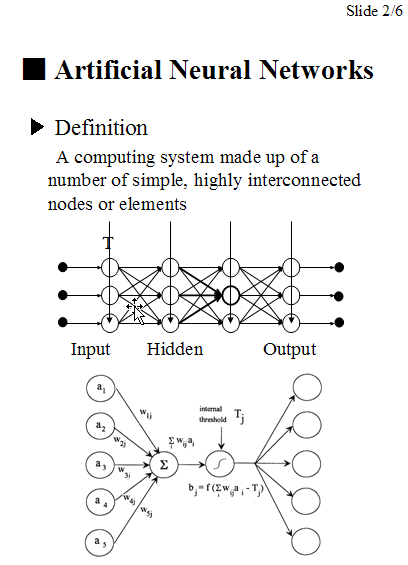
Simple slides here.
o How to use artificial neural network toolbox
Step 1: Prepare data set
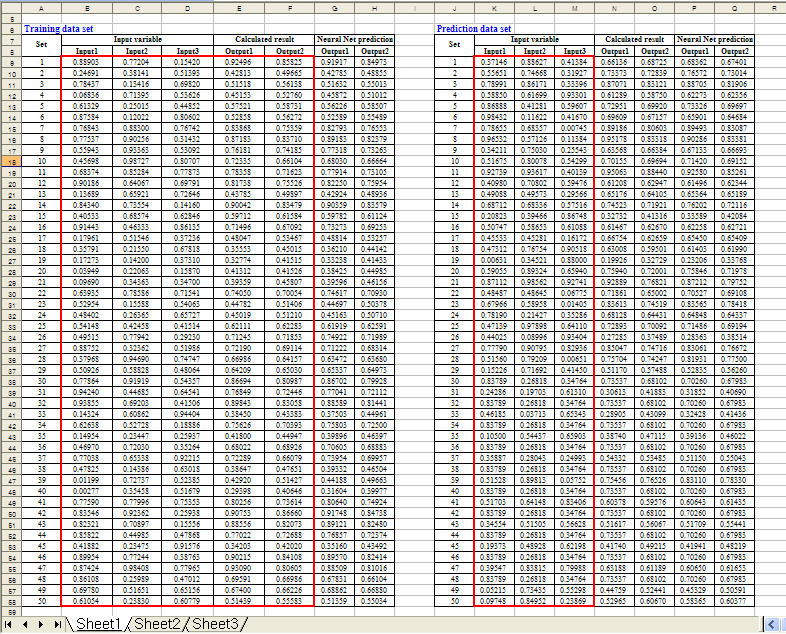
Here is a simple example. Using Microsoft Excel, the following table was generated. Click here to download 'Sample SinCos.xls'
In the 'Equation', 'Calculated Output1' and 'Calculated Output2' were divided by 2 or 3 to normalize data. Keep in mind that all data values should be less than 1 and must be normalized if they are bigger than 1. If the numbers are higher than 1 it may mean that they are out of range for the neural network prediction.
New update! A new function for data normalization has been implemented!
| Equation |
Input1=Rand()
'random number between 0 and 1 Input2=Rand() 'random number between 0 and 1 Input3=Rand() 'random number between 0 and 1 Calculated Output1=(Input1+Input2^Input3)/2 Calculated Output2=(Input1+Sin(Input2)+Cos(Input3))/3 |
||||||
Step 2: Configure a neural network
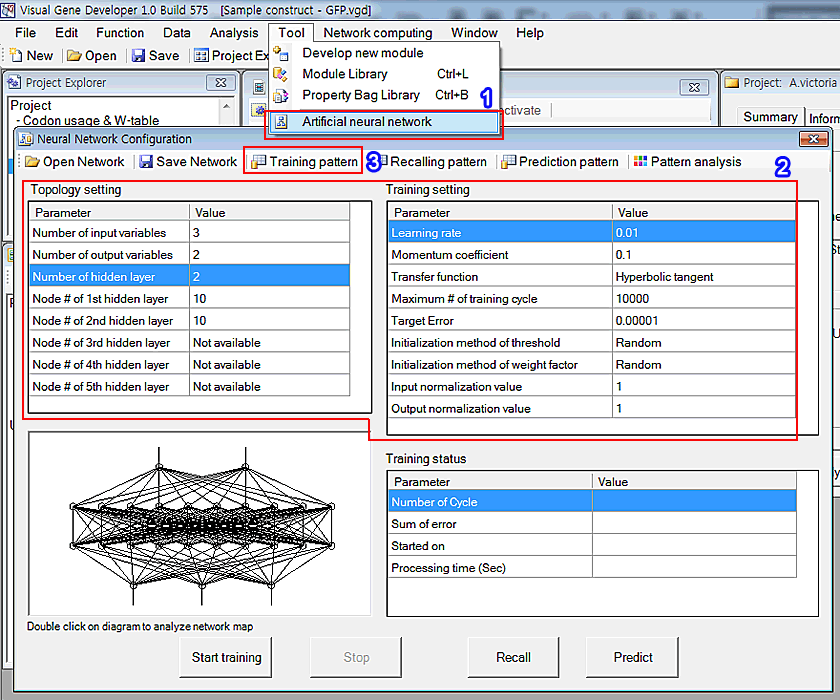
1. Click the 'Artificial neural network' in the 'Tool' menu
2. You can see the window titled 'Neural Network Configuration'. Adjust parameters as shown in the 'Topology setting' and 'Training setting'
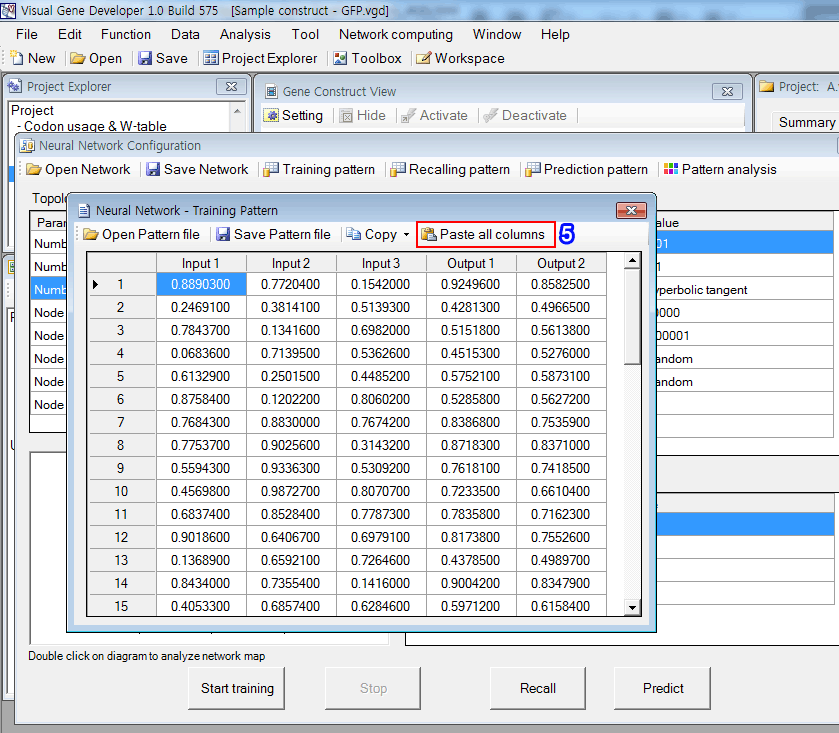
3. First, click on the 'Training pattern' button in order to set up the training data set. Immediately, you can see a new pop-up window. But it doesn't include any data initially.
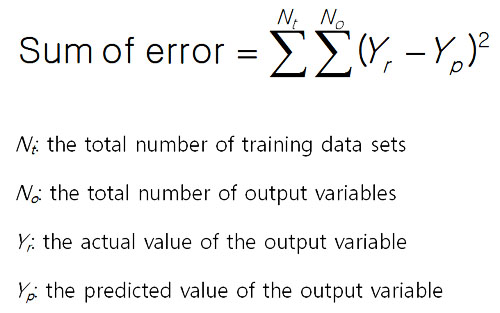
The sum of error is defined by the following equation.
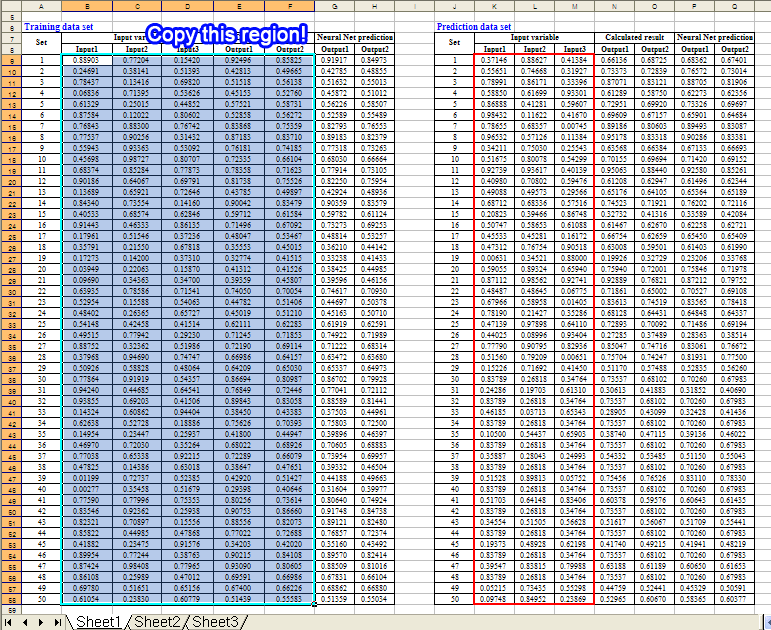
4. Copy the following region of the training data set in the Excel document
5. Click on the 'Paste all columns' button in the 'Neural Network - Training Pattern' window. It retrieves text data from the clipboard and pastes it to the table as shown in the figure.
Step 3: Start learning process (=data regression)
1. Click on the 'Start training' button. It took about 70 seconds to repeats 30,000 cycles.
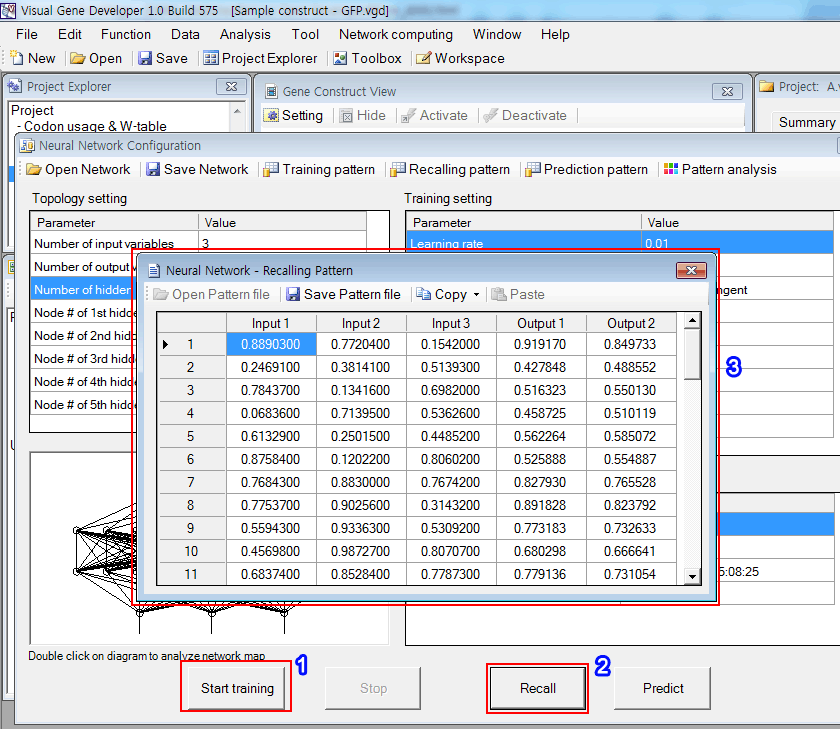
2. Click on the 'Recall' button.
3. The software filled the empty columns (Outpu1 and Output2) with numbers and you can check the predicted values. The 'Copy' button is available.
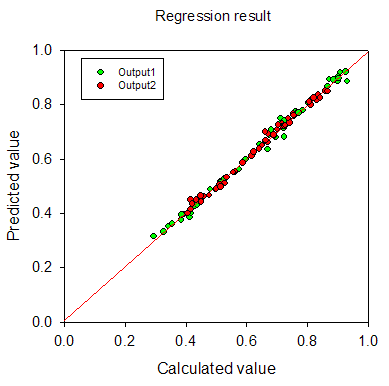
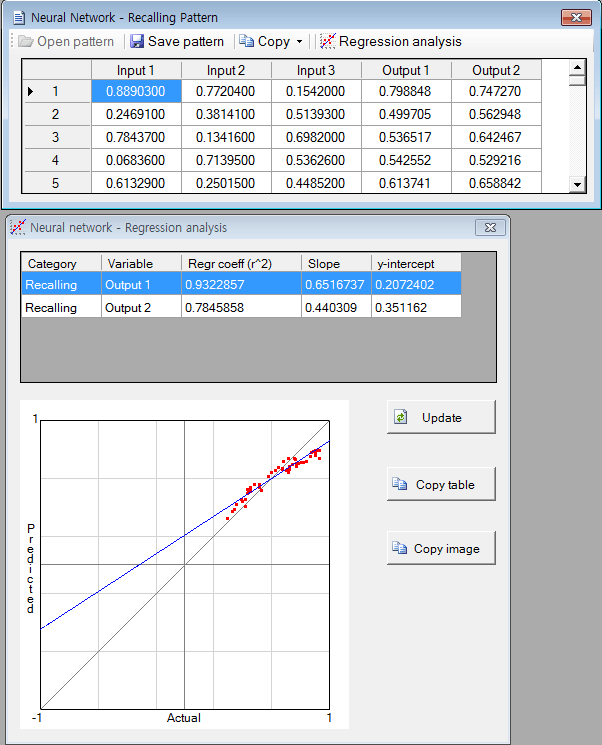
4. The regression result is shown in the below figure. It looks quite good.
Step 4: Predict new data set
1. Copy the following region of the training data set in the Excel document.
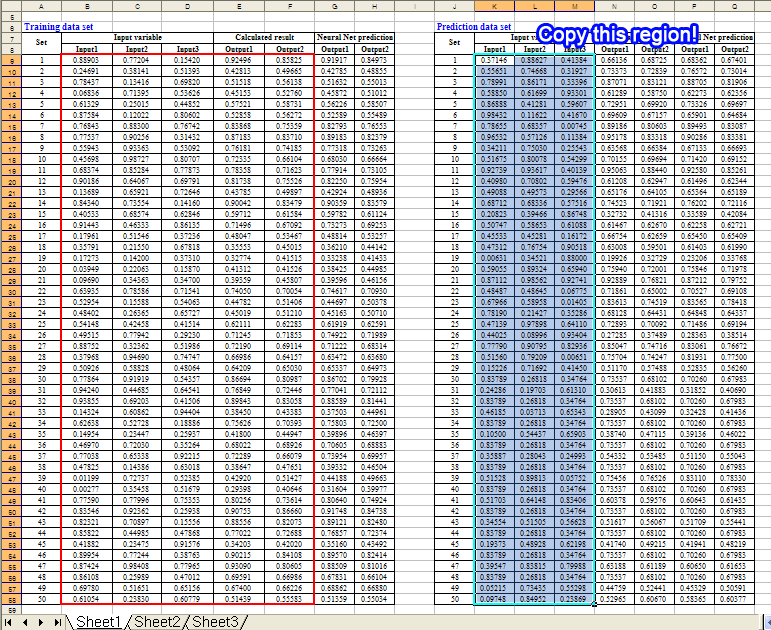
2. Click on the 'Prediction pattern' button in the 'Neural Network Configuration' window
3. Click on the 'Paste Input columns' button to paste data of clipboard to the table
4. Click on the 'Predict' button. It will complete the table as shown in the figure. You can check the predicted values.
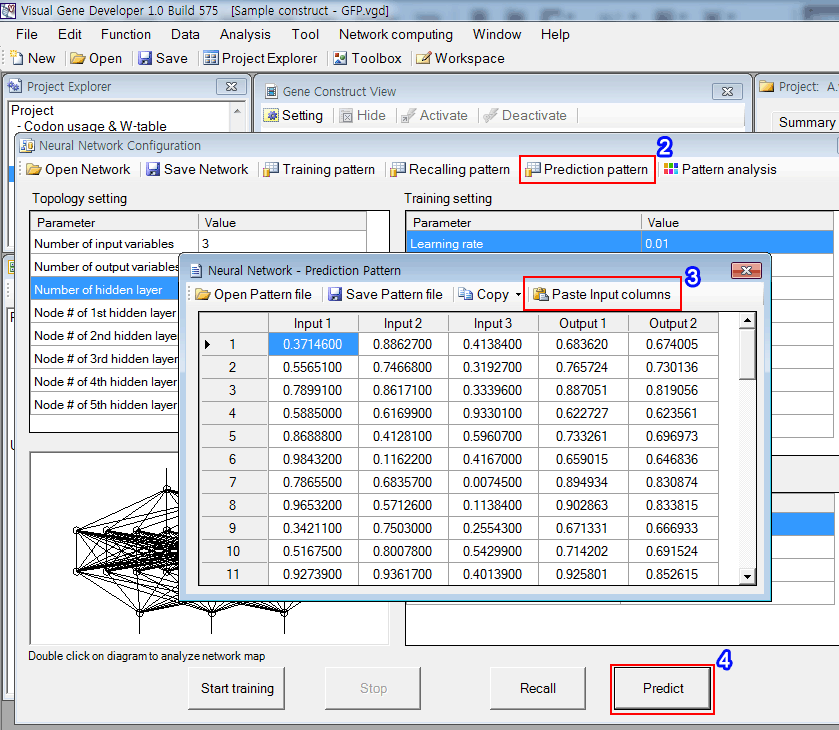
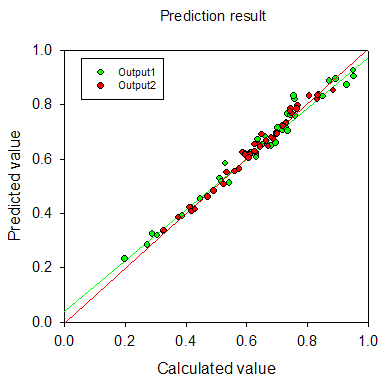
5. The result is shown in the figure. It really works well.
New!! Watch YouTube video tutorial
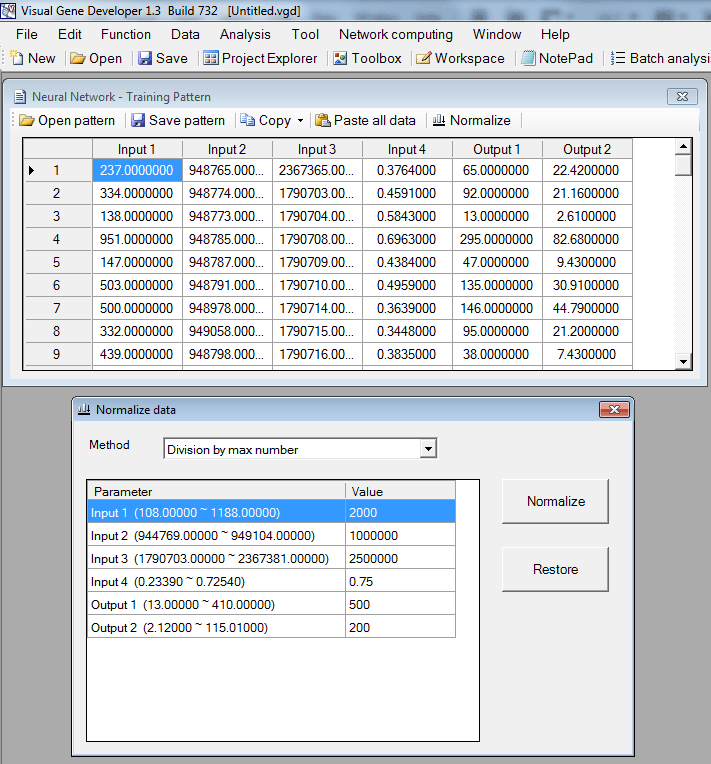
- Click on the 'Normalize' button to show the pop-up window.
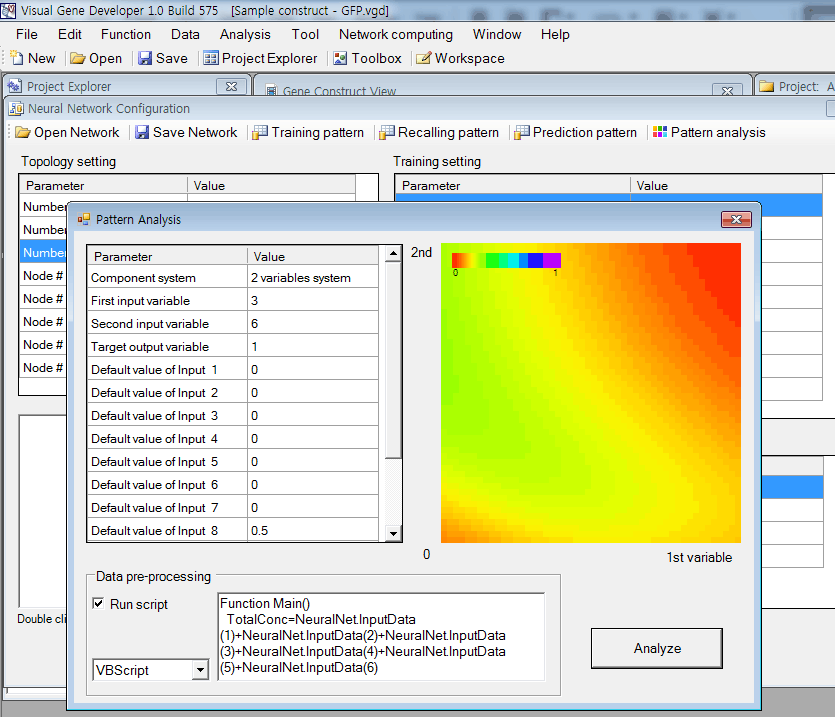
In the case of multiple input variable systems, Visual Gene Developer provides a useful function to test 2 or 3 input variables as a nice plot.
2-D plot for two-variable system
Ternary plot for three input variable system
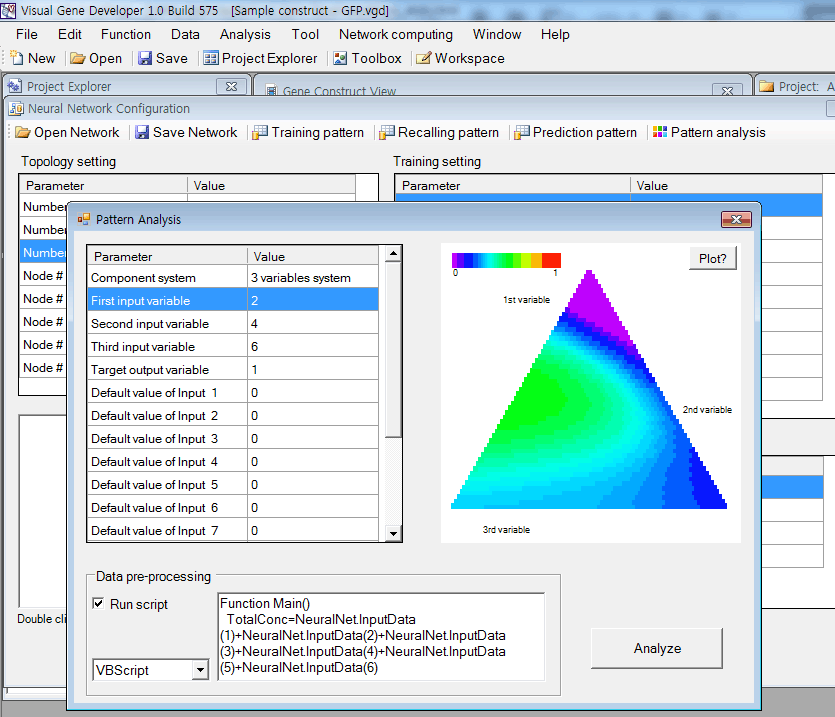
'Data pre-processing' is performed if 'Run script' is checked.
Internally, Visual Gene Developer assigns initial values of all input variables and then executes the script code written in 'Data pre-processing'.
This function is useful when a certain input variable depends on other variables. For example, input 3 is the sum of input 1 and input 2.
To adjust the value of input 3, you can write code like,
|
Function Main() |
Visual Gene Developer provides a graphical visualization of a trained network for a user. You can check the color and width of a line or circle.
Lines represent weight factors and circles (node) mean threshold values.
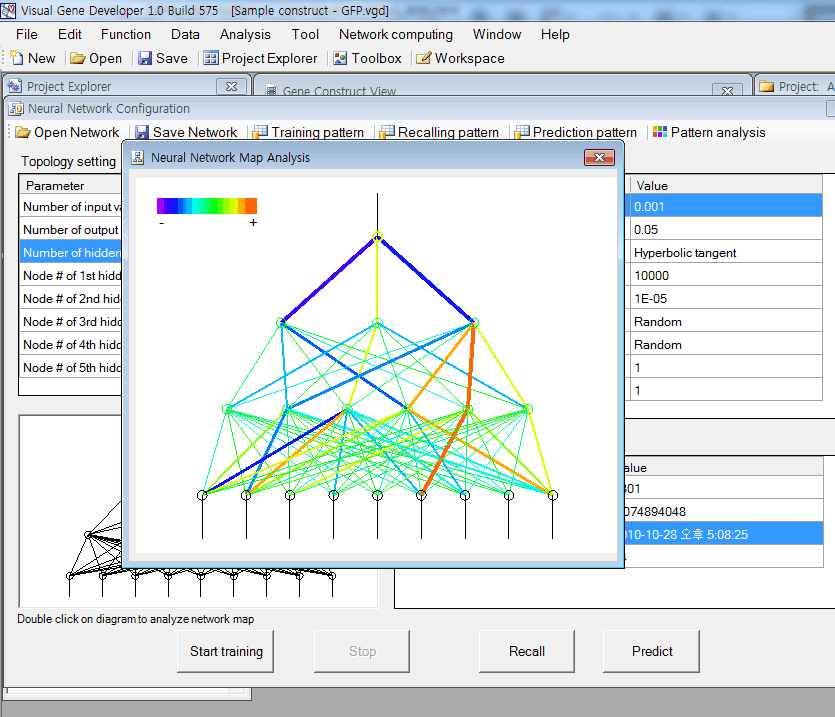
Just double-click on a diagram in the 'Neural Network Configuration' window.
In the diagram, the red color corresponds to a high positive number and violet color means a high negative number. Line width is proportional to the absolute number of weight factor or threshold value.
o Regression analysis New update!
o More information about Neural network data format
You can save the data set table as a standard comma delimited text file. Our neural network (trained) data file is also easily accessible because it has a standard text file format. You can open sample files and check the content.
o How to use 'NeuralNet' class
Although Visual Gene Developer has a user-friendly neural network toolbox, a user may prefer using the 'NeuralNet' class to make customized analysis module. A user can use maximum 5 instances of NeuralNet including 'NeuralNet', 'NeuralNet2', 'NeuralNet3', 'NeuralNet4', and 'NeuralNet5'.
Example
1. Click on the 'Module Library' in the 'Tool' menu
2. Choose the 'Sample NeuralNet' item in the 'Module Library' window
3. Click on the 'Edit Module' button in the 'Module Library' window
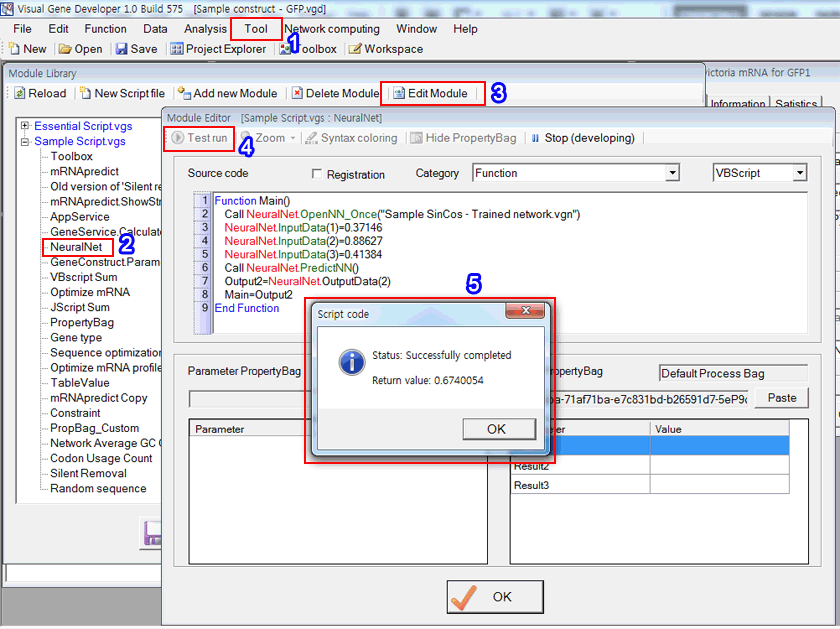
4. Click on the 'Test run' button in the 'Module Editor' window. Check source code and explanation!
Source code
VBScript
Crimson Keep Ch 7 V16 Introspurt Better -
Since you included the word "better" at the end, I am unsure if you are asking for:
The seventh chapter of Intro’s Crimson Keep —specifically version 16—serves as a pivotal masterclass in how interactive fiction can balance high-octane fantasy with profound character introspection. While the game is often celebrated for its sprawling world-building and intricate mechanics, this specific iteration of Chapter 7 acts as the narrative’s emotional anchor. It is here that the weight of the protagonist's journey shifts from the external struggle for survival to the internal struggle for identity.
If you want to experience the smoothest, most stable build of Soriel's journey, downloading or updating to the is highly recommended. You can track ongoing project updates, report bugs, and read development notes directly through the official Introspurt Newgrounds Hub and community channels.
: During boss fights in the Crimson Keep, players can trigger short, interactive "introspection" scenes. These aren't just cutscenes; they require quick tactical decisions that determine whether the boss gets debuffed or if Persephone gains a "Willpower" boost to ignore status effects. crimson keep ch 7 v16 introspurt better
Crimson Keep Ch 7 v16: Why Introspurt’s Latest Update Delivers a Better Experience
In pre-v16 versions, Introspurt was clunky. It broke the flow of combat. Enemies in Chapter 7 (like the Lamenting Knights and Sorrow Wisps ) are designed to punish stationary targets. As a result, using Introspurt often led to death. Players resorted to ignoring magic entirely, turning Chapter 7 into a tedious slog of physical attacks only.
To make the Crimson Keep Chapter 7 (v.16) feature stand out, you should focus on expanding the player's tactical agency and character depth, especially following the intense climax of Chapter 6. Proposed Feature: The "Echo of the Keep" System Since you included the word "better" at the
Lyra stepped closer. Her reflection didn’t mirror her movement—it stayed frozen, smiling at the other Kaelen. She noticed. Her jaw tightened.
The short answer is yes. But to understand why is the most significant quality-of-life buff in the game’s history, we need to break down the mechanics, the old frustrations, and the new dominant strategies.
: If your inventory runs low on vital recovery potions, temporarily leave the main objective zone to farm lower-tier imps and restock. If you want to experience the smoothest, most
[ Encounter Enemy ] │ ┌───────┴───────┐ ▼ ▼ [ Tempt Spell ] [ Attack Power ] │ │ ▼ ▼ (Charm / Drain) (Raw HP Damage) │ │ └───────┬───────┘ ▼ [ Secure Covenant ] New Chapter 7 Character Covenants
“Then what is it?”
"Of all the versions of Crimson Keep's Chapter 7, version 16—the one with the introspurt mechanic—is the best."
The evolution of high-stakes narratives in digital literature often hinges on a single, pivotal chapter that redefines the stakes. In the context of Crimson Keep , Chapter 7, Volume 16—specifically the sequence—represents a masterclass in narrative acceleration, character depth, and thematic payoff.
5. The 'Return message' shows a result. It's the same value as shown in the previous prediction date table.
